
Author: admin

  • 10 Smart Investment Strategies for Beginners

    10 Smart Investment Strategies for Beginners

    10 Smart Investment Strategies for Beginners

    10 Smart Investment Strategies for Beginners,Investing can seem confusing when you are just starting out. With so many options like stocks, mutual funds, real estate, and cryptocurrencies, beginners often struggle to decide where to begin. However, the truth is that successful investing does not require complicated strategies or large amounts of money.

    The key to building wealth through investing is consistency, patience, and smart decision-making. Even small investments can grow significantly over time when managed wisely.

    In this guide, we will explore 10 smart investment strategies for beginners that can help you build a strong financial foundation and grow your wealth over time.

    1. Start Investing as Early as Possible

    One of the most powerful advantages in investing is time. The earlier you start investing, the more time your money has to grow through compound interest.

    For example, if you start investing $200 per month in your 20s, you could accumulate significantly more wealth than someone who starts investing in their 30s or 40s.

    Even small investments can grow over time because your earnings start generating their own earnings. This is known as compound growth, and it is one of the most powerful forces in finance.

    The most important step for beginners is simply starting early and staying consistent.

    2. Set Clear Investment Goals

    Before investing, it is important to define your financial goals. Knowing why you are investing will help you choose the right strategy.

    Common investment goals include:

    • Saving for retirement

    • Buying a house

    • Building long-term wealth

    • Creating passive income

    • Funding education

    Short-term and long-term goals require different investment strategies. For example, long-term investors may focus on stocks and index funds, while short-term goals may require safer investment options.

    Setting clear goals helps you stay focused and avoid emotional investment decisions.

    3. Build an Emergency Fund First

    Before putting money into investments, it is wise to create an emergency fund. This fund acts as a financial safety net in case of unexpected expenses such as medical emergencies, job loss, or urgent repairs.

    Financial experts generally recommend saving three to six months of living expenses in an easily accessible account.

    Having an emergency fund prevents you from selling investments during market downturns and protects your long-term financial plan.

    4. Diversify Your Investment Portfolio

    Diversification is one of the most important principles in investing. It means spreading your money across different types of investments rather than putting everything into a single asset.

    A diversified portfolio may include:

    • Stocks

    • Bonds

    • Mutual funds

    • Exchange-traded funds (ETFs)

    • Real estate investments

    Diversification helps reduce risk because if one investment performs poorly, other investments may perform better.

    For beginners, diversification is a simple yet powerful way to protect your portfolio from market volatility.

    5. Invest in Index Funds or ETFs

    Index funds and exchange-traded funds (ETFs) are excellent investment options for beginners. These funds track the performance of a market index and provide exposure to many companies at once.

    Benefits include:

    • Lower investment risk

    • Low management fees

    • Built-in diversification

    • Easy to manage

    Many financial experts recommend index funds because they have historically delivered consistent long-term returns compared to actively managed funds.

    For beginners who want a simple strategy, investing in index funds regularly can be a great way to build wealth.

    6. Invest Consistently with Dollar-Cost Averaging

    Dollar-cost averaging is a strategy where you invest a fixed amount of money at regular intervals, regardless of market conditions.

    For example, you might invest $200 every month into a stock or fund.

    This strategy helps beginners in several ways:

    • Reduces the impact of market volatility

    • Removes emotional decision-making

    • Encourages disciplined investing

    Over time, dollar-cost averaging allows you to buy investments at different price levels, which can help reduce the average cost of your investment.

    7. Focus on Long-Term Investing

    Many beginners make the mistake of trying to earn quick profits in the stock market. However, successful investors usually focus on long-term growth rather than short-term gains.

    Markets naturally experience ups and downs, but historically they have shown strong growth over long periods.

    Long-term investing offers several advantages:

    • Higher potential returns

    • Lower trading costs

    • Reduced stress from market fluctuations

    Patience is a key ingredient for investment success. Staying invested for many years can significantly increase the value of your portfolio.

    8. Keep Investment Costs Low

    Investment costs may seem small at first, but they can significantly reduce your returns over time.

    Common investment costs include:

    • Fund management fees

    • Brokerage commissions

    • Transaction charges

    Choosing low-cost investment options such as index funds or ETFs can help maximize your returns.

    For example, a fund with a 1% annual fee may cost you thousands of dollars in lost returns over the long term compared to a fund with a 0.1% fee.

    Keeping costs low is a simple strategy that can greatly improve long-term investment performance.

    9. Continue Learning About Investing

    The financial world is constantly evolving, so continuous learning is essential for successful investing.

    Beginner investors should spend time learning about topics such as:

    • Stock market basics

    • Risk management

    • Asset allocation

    • Market trends

    You can improve your knowledge by reading books, following financial blogs, or taking online courses about investing.

    The more you understand about investing, the more confident and informed your decisions will be.

    10. Avoid Emotional Investing

    Emotions can be one of the biggest enemies of successful investing. Many beginners panic when markets decline or become overly excited when prices rise rapidly.

    Emotional decisions often lead to buying investments at high prices and selling them at low prices.

    To avoid emotional investing:

    • Stick to your long-term strategy

    • Ignore short-term market noise

    • Focus on your financial goals

    Successful investors understand that market fluctuations are normal and stay committed to their long-term plans.

    Final Thoughts

    Investing does not have to be complicated. By following simple and smart strategies, beginners can build a strong investment portfolio and grow their wealth over time.

    The most important principles include starting early, diversifying your investments, investing consistently, and focusing on long-term growth.

    Remember that investing is a journey, not a quick way to make money. Patience, discipline, and continuous learning will help you become a more successful investor over time.

    If you apply these 10 smart investment strategies, you can take control of your financial future and move closer to achieving your long-term financial goals.
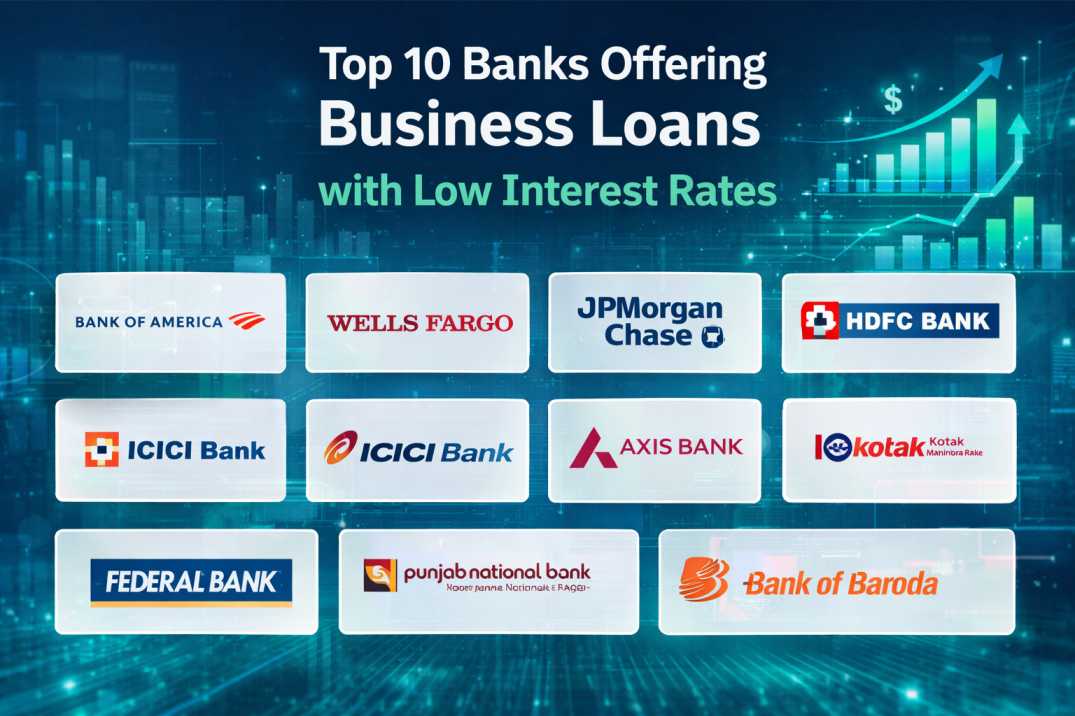

  • Top 10 Banks Offering Business Loans with Low Interest Rates

    Top 10 Banks Offering Business Loans with Low Interest Rates

    Top 10 Banks Offering Business Loans with Low Interest Rates
    Top 10 Banks Offering Business Loans with Low Interest Rates

    Top 10 Banks Offering Business Loans with Low Interest Rates,Starting or expanding a business often requires significant capital. Whether you want to purchase equipment, hire employees, increase inventory, or open a new location, a business loan can provide the financial support you need. Fortunately, many banks offer small business loans with competitive interest rates and flexible repayment options.

    Choosing the right lender is crucial because interest rates, loan terms, and approval requirements can vary widely between banks. In this guide, we will explore the top 10 banks offering business loans with low interest rates, along with their features, eligibility requirements, and benefits.

    Why Choosing the Right Bank Matters

    Before applying for a business loan, it is important to compare lenders carefully. Different banks provide different loan amounts, interest rates, and repayment terms.

    Key factors to consider include:

    • Interest rate and total borrowing cost

    • Loan amount available

    • Processing fees

    • Repayment tenure

    • Approval speed

    • Eligibility requirements

    Many banks now offer digital loan applications, allowing businesses to apply online and receive approval quickly.

    1. Bank of America

    Bank of America is one of the most popular lenders for small business financing. It offers various business loan options, including term loans, lines of credit, and SBA-backed loans.

    Key features:

    • Loan amount starting from $10,000

    • Interest rates approximately 6.5% to 14.24% APR

    • Relationship discounts for existing customers

    • Flexible repayment options

    Bank of America business loans typically require strong credit, at least two years in business, and steady annual revenue.

    2. Wells Fargo

    Wells Fargo is another major bank offering financing solutions for small businesses and startups.

    Key benefits:

    • SBA loans and term loans

    • Loan amounts up to several million dollars

    • Flexible repayment periods

    • Competitive interest rates

    Wells Fargo is also one of the top lenders for SBA loans, which often have lower interest rates and longer repayment periods.

    3. JPMorgan Chase Bank

    Chase Bank offers multiple funding options designed specifically for entrepreneurs and growing businesses.

    Loan features:

    • Business term loans and credit lines

    • Competitive interest rates

    • Loan amounts starting from $5,000

    • Easy integration with Chase business banking

    Chase is ideal for businesses that already maintain a business account with the bank because existing customers often receive faster approval.

    4. HDFC Bank

    HDFC Bank is one of the leading lenders providing small business loans in India.

    Important highlights:

    • Interest rates starting around 10.75% annually

    • Loan amounts up to ₹75 lakh

    • Quick approval process

    • Minimal documentation

    HDFC Bank is known for its digital loan processing and quick disbursement, making it popular among small and medium enterprises.

    5. ICICI Bank

    ICICI Bank offers flexible business loans designed for startups and small enterprises.

    Key features:

    • Interest rates roughly 13% to 19.5% annually

    • Loan amounts up to ₹50 lakh

    • Flexible repayment tenures

    • Industry-specific financing options

    ICICI Bank also provides customized financing for sectors like retail, manufacturing, and service businesses.

    6. Axis Bank

    Axis Bank provides funding solutions for working capital, equipment purchases, and business expansion.

    Key advantages:

    • Interest rates starting around 11% per year

    • Loan amounts up to ₹75 lakh

    • Online application process

    • Flexible repayment options

    Axis Bank is particularly popular among small and medium businesses due to its quick approval and digital services.

    7. Kotak Mahindra Bank

    Kotak Mahindra Bank offers specialized business loans tailored to various industries.

    Loan highlights:

    • Loan amounts up to ₹1 crore

    • Competitive interest rates

    • Flexible repayment tenure

    • Industry-specific financing programs

    The bank is known for providing customized loans for industries such as healthcare, education, and technology startups.

    8. Federal Bank

    Federal Bank provides business loans to both small businesses and large enterprises.

    Benefits include:

    • Interest rates between 11.35% and 17.95%

    • Loan amounts up to ₹20 crore

    • Flexible repayment terms

    • Easy online application

    Federal Bank also offers working capital loans and project financing solutions for businesses.

    9. Punjab National Bank (PNB)

    Punjab National Bank is one of India’s largest public sector banks offering affordable business financing.

    Key features:

    • Interest rates approximately 9.40% to 10.65%

    • Loans designed for MSMEs

    • Government-supported financing schemes

    • Flexible loan tenure

    PNB loans are particularly beneficial for small businesses because they often include government-supported credit schemes.

    10. Bank of Baroda

    Bank of Baroda is another reliable bank offering business loans with relatively low interest rates.

    Loan benefits:

    • Interest rates starting around 10.20% annually

    • Loan options for MSMEs and startups

    • Flexible repayment terms

    • Government-supported loan schemes

    This bank is often chosen by entrepreneurs who want affordable financing with longer repayment periods.

    How to Choose the Best Bank for a Business Loan

    Selecting the right bank can make a significant difference in your business finances. Here are some tips to help you choose the best lender.

    Compare Interest Rates

    Always compare the interest rates offered by multiple banks. Even a small difference in interest rate can significantly affect the total cost of borrowing.

    Check Eligibility Requirements

    Banks may require:

    • Minimum credit score

    • Business revenue records

    • Financial statements

    • Tax returns

    Make sure your business meets the bank’s eligibility criteria before applying.

    Evaluate Processing Fees

    Many lenders charge processing fees that may range from 2% to 5% of the loan amount, so always include these costs when comparing loan offers.

    Look at Repayment Flexibility

    Choose a bank that offers flexible repayment options such as longer tenures, early repayment without penalties, or adjustable EMI plans.

    Tips to Get a Low-Interest Business Loan

    If you want the lowest possible interest rate, follow these strategies:

    Improve your credit score
    A higher credit score increases your chances of getting lower interest rates.

    Prepare strong financial records
    Banks prefer businesses with stable income and clear financial statements.

    Build a relationship with your bank
    Existing customers often receive better loan terms and faster approvals.

    Apply for government-backed schemes
    Government loan programs for MSMEs often offer lower interest rates compared to regular business loans.

    Final Thoughts

    Business loans can play a crucial role in helping entrepreneurs grow and expand their companies. By choosing the right lender, you can secure funding with low interest rates and flexible repayment terms.

    Banks such as Bank of America, Wells Fargo, HDFC Bank, ICICI Bank, Axis Bank, and Punjab National Bank offer competitive loan options for businesses of all sizes. Before applying, always compare lenders, understand the loan terms, and ensure your business meets the eligibility requirements.

    With the right financing strategy, a business loan can help you invest in new opportunities, increase productivity, and achieve long-term growth.

  • How to Get a Small Business Loan in 2026 (Complete Guide)

    How to Get a Small Business Loan in 2026 (Complete Guide)

    How to Get a Small Business Loan in 2026 (Complete Guide)

    How to Get a Small Business Loan in 2026 (Complete Guide),Starting or expanding a business often requires capital. Whether you need money for equipment, inventory, hiring employees, or marketing, a small business loan can provide the financial support you need. In 2026, there are more financing options than ever before, including traditional banks, online lenders, and government-backed programs.

    In this complete guide, you will learn how to get a small business loan, the requirements, the types of loans available, and tips to increase your chances of approval.

    What Is a Small Business Loan?

    A small business loan is funding provided by banks, financial institutions, or online lenders to help businesses cover operational or growth-related expenses. These loans typically come with an interest rate and repayment period.

    Small business loans can be used for many purposes, such as:

    • Purchasing equipment or machinery

    • Expanding your business location

    • Hiring employees

    • Managing cash flow

    • Buying inventory

    • Marketing and advertising

    With the rise of digital lending platforms in 2026, business owners can now apply for loans online and receive approval within hours or days.

    Types of Small Business Loans in 2026

    Understanding the different loan options available can help you choose the best financing solution for your business.

    1. Term Loans

    A term loan is the most common type of business loan. You borrow a fixed amount of money and repay it over a set period with interest.

    Key features:

    • Fixed repayment schedule

    • Predictable interest rates

    • Suitable for long-term investments

    These loans are ideal for business expansion, purchasing equipment, or opening a new location.

    2. SBA Loans

    Government-backed loans are among the most popular funding options for small businesses. These loans usually offer lower interest rates and longer repayment periods.

    Benefits include:

    • Lower interest rates

    • Longer repayment terms

    • Government support

    However, the application process may take longer because of documentation requirements.

    3. Business Line of Credit

    A business line of credit works like a credit card. You can borrow money up to a certain limit and only pay interest on the amount you use.

    Advantages:

    • Flexible borrowing

    • Only pay interest on used funds

    • Ideal for managing cash flow

    This option is perfect for businesses that experience seasonal revenue fluctuations.

    4. Equipment Financing

    Equipment financing allows businesses to purchase machinery, vehicles, or technology needed for operations.

    Key points:

    • Equipment serves as collateral

    • Lower interest rates

    • Easier approval

    Many startups choose this option because it reduces the need for large upfront investments.

    5. Short-Term Business Loans

    Short-term loans are designed for quick funding needs and usually have repayment periods between 3 months and 24 months.

    These loans are commonly used for:

    • Emergency expenses

    • Inventory purchases

    • Short-term cash flow problems

    While approval is faster, interest rates may be higher compared to traditional loans.

    Requirements to Get a Small Business Loan

    Before applying for a loan, lenders evaluate several factors to determine whether your business qualifies.

    1. Credit Score

    Your credit score is one of the most important factors lenders consider. A higher score increases your chances of approval and better interest rates.

    Recommended credit score levels:

    • 700+ – Excellent approval chances

    • 650–700 – Good chances

    • 600–650 – Limited options

    • Below 600 – Difficult but still possible with alternative lenders

    2. Business Plan

    A strong business plan shows lenders how your business operates and how the loan will help generate revenue.

    Your plan should include:

    • Business overview

    • Market analysis

    • Revenue projections

    • Loan usage plan

    A detailed business plan can significantly increase lender confidence.

    3. Business Revenue

    Lenders want to ensure that your business generates enough income to repay the loan.

    Many lenders require:

    • At least 6–12 months of business history

    • Consistent monthly revenue

    Online lenders may accept newer businesses with lower revenue requirements.

    4. Collateral

    Some loans require collateral, which is an asset used to secure the loan.

    Common collateral includes:

    • Business equipment

    • Real estate

    • Inventory

    • Vehicles

    If you fail to repay the loan, the lender may seize the collateral.

    Step-by-Step Process to Get a Small Business Loan

    Getting a business loan is easier when you follow a structured process.

    Step 1: Determine How Much Funding You Need

    Start by calculating exactly how much money your business requires. Avoid borrowing more than necessary because it increases repayment costs.

    Consider expenses like:

    • Equipment purchases

    • Employee salaries

    • Rent and utilities

    • Marketing costs

    Step 2: Check Your Credit Score

    Before applying, review your personal and business credit scores. If your score is low, consider improving it by:

    • Paying off outstanding debts

    • Reducing credit card balances

    • Correcting credit report errors

    Improving your score can help you secure lower interest rates.

    Step 3: Compare Different Lenders

    Not all lenders offer the same loan terms. Compare multiple options such as:

    • Traditional banks

    • Credit unions

    • Online lenders

    • Government loan programs

    Look at important factors including interest rates, fees, repayment terms, and approval speed.

    Step 4: Prepare Your Documents

    Most lenders require certain documents during the application process.

    Common documents include:

    • Business registration documents

    • Tax returns

    • Bank statements

    • Financial statements

    • Business plan

    Preparing these documents in advance can speed up the approval process.

    Step 5: Submit Your Loan Application

    Once everything is ready, submit your application online or through the lender’s office. Many online lenders now offer same-day approvals and fast funding.

    After submission, the lender will review your financial information and determine whether to approve your loan.

    Tips to Increase Your Chances of Loan Approval

    Getting approved for a business loan can be competitive. These tips can improve your success rate.

    Maintain a Strong Credit Profile

    Pay bills on time and keep your debt levels low. A good credit history makes lenders more comfortable lending money.

    Build Business Revenue

    Lenders prefer businesses with consistent income. Focus on increasing your revenue before applying for large loans.

    Reduce Existing Debt

    If your business already has multiple loans, lenders may see you as a higher risk.

    Choose the Right Loan Type

    Select a loan that matches your business needs. For example, equipment financing is better for machinery purchases than a general loan.

    Advantages of Small Business Loans

    Small business loans offer many benefits for entrepreneurs and growing companies.

    Key advantages include:

    • Access to growth capital

    • Improved cash flow

    • Business expansion opportunities

    • Ability to hire more employees

    • Investment in marketing and technology

    With proper planning, a business loan can accelerate business growth and profitability.

    Final Thoughts

    Getting a small business loan in 2026 is easier than ever thanks to digital lenders and government-backed programs. By understanding the loan types, meeting lender requirements, and preparing strong financial documents, you can significantly improve your chances of approval.

    Before applying, always compare multiple lenders and choose a loan that aligns with your business goals. Responsible borrowing and proper financial planning will ensure that your loan becomes a powerful tool for business growth.

    If you are planning to start or expand your business, a small business loan could be the key to unlocking new opportunities and long-term success.